

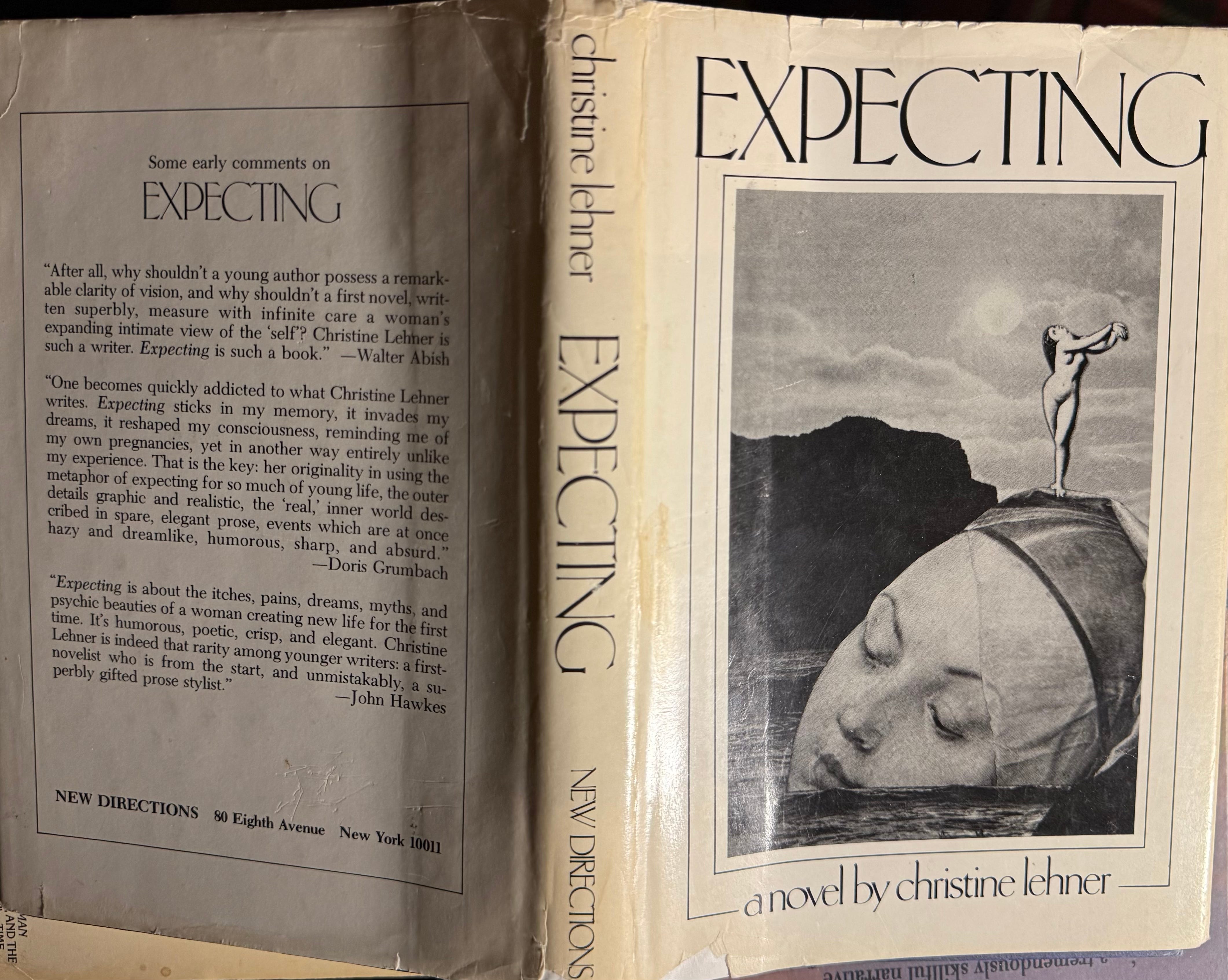
She is expecting: it starts with a sample of urine, suffocating heat, driving to town, the pregnancy confirmed. I always think of California, but have to remind myself that the place, the marshes where they have a house, must be on the East Coast. People are abbreviated to single letters: husband J, paranoid friend P, teacher H. The narrating I, after all, is also just one letter. I will give P a role here larger than she assumes in this book, which can be said to grow unhurriedly and with no concern for effect, just like a pregnancy. The text constantly moves between reported daytime experience and reported dreams, dreams that contribute depth in a very effective way, better than flashbacks would. And of course there’s the weight of the future: expectations and fears, observations of the husband (calm and interested, no need to raise the stakes here), of bodily changes: blue veins appearing on the breasts, the body itching. She scratches a lot. ‘Please stop scratching. You’re going to start bleeding and then you’ll regret it,’ says her mother. ‘My mother and I drink iced drinks beside the cavity that will soon be her swimming pool.’ And there is also the grandmother, four generations if you include baby Milo still swimming in the uterus. The couple visits P (‘P insisted that we come’). P, who seems to be attacking both the bonded, contented, ‘us’ and the pregnancy, constantly pushes a different story: ‘she narrates for us the plot of Gigi (…) she recounts details we had happily forgotten.’ Gigi made me attentive of a subterranean network of Colette references that appear in several novels in the set — it actually made me buy (but not yet read) Mitsou. ‘On the bathroom wall, blocked out in pastel colors, is her thorazine schedule.’ P repeatedly makes unpleasant phone calls, filled with resentment and jealousy: ‘I find people like you, who remember so accurately the names of persons mentioned in the Alumni Bulletin, to be deplorable. You remember me talking about him, and then you read about him. You put it all together: that kind of memory is a sign of extreme deviousness.’ – ‘P, we don’t have to be friends. We can just hang up and that will be the end of it.’ P talks about H, apparently the object of jealousy (H could be John Hawkes, whose Viriginie – Her Two Lives is in the set of one hundred novels of 1982, and who also contributed a blurb to Expecting). Again, P, paranoid: ‘“You’d like it if I left H alone, but I’m not going to. You could be very dangerous if I let you, but I’m not going to.” – “Goodbye, P.” In the silence that follows, I replace the receiver very gently. And I do not ever want to touch it again. It has become an unclean poisoned object.’