

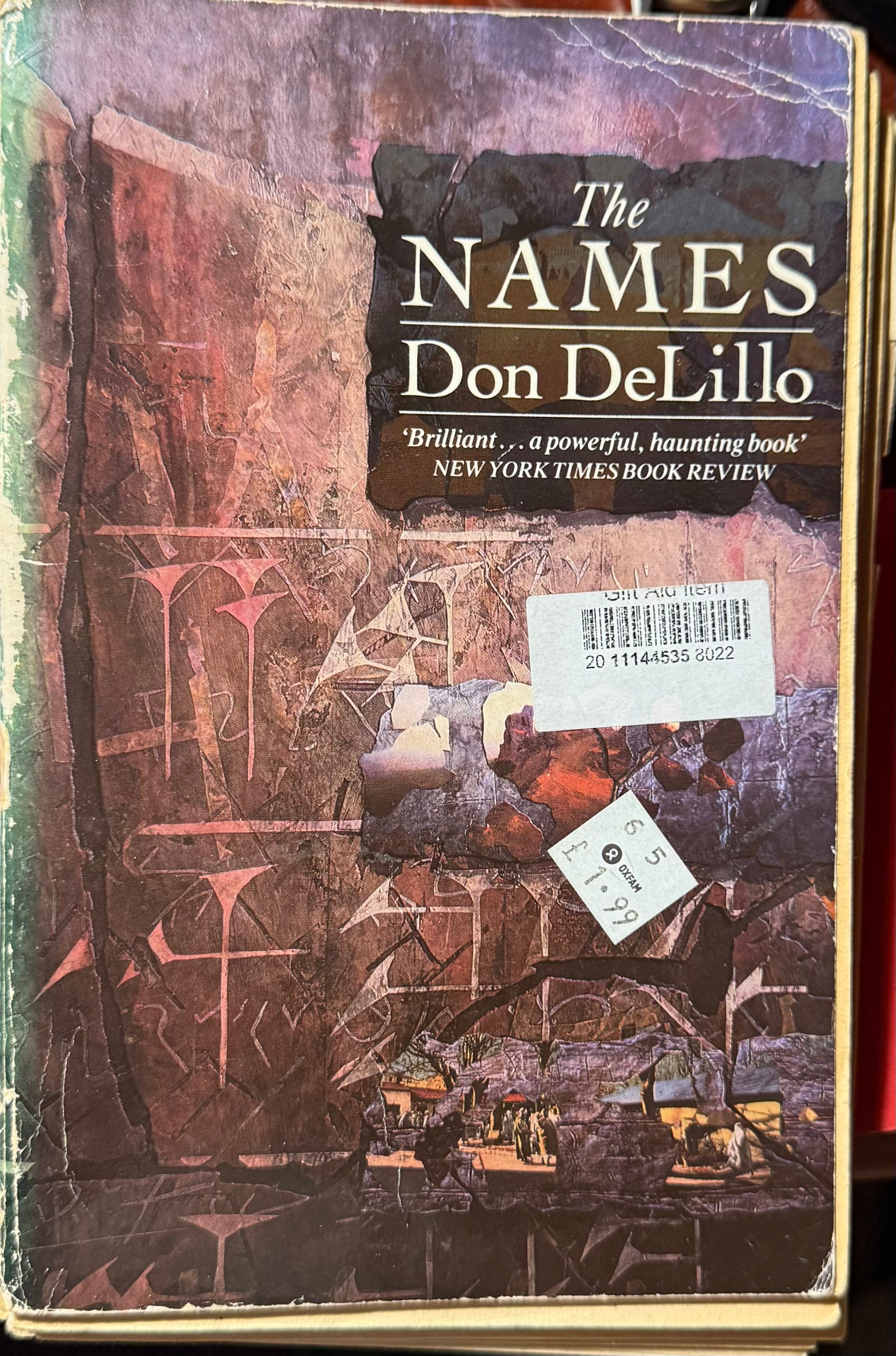
It is difficult to do this book justice in the format I have chosen. James and Kathryn are divorced; there is an implication he still loves her, or that they are still very much involved, just estranged; they have a son, Tap, maybe ten or eleven, who already writes a novel, an excerpt of which will end the book because this type of book does not have an ending that resolves anything; James visits them on the Greek island where Kathryn works on an archaeological excavation; his information gathering or due diligence business (at the end he appears to be a possibly half-unwitting CIA informer) makes him a frequent traveller, and there is rather brilliant description on how the consulting class cope with the various cultural and political constellations at the places they have to travel to: ‘We were a subculture, business people in transit, growing old in planes and airports. We were versed in percentages, safety records, in the humor of flaming death.’ I could go on and wreck the chosen format. The plot has it that cult murders happen which seem to follow some pattern linking the initials of the victim’s name (hence the title) with the place of murder. This seems far-fetched, but if that occasions the movements from the Greek island to the Peloponnese, then to Jordan, Israel, finally to India, it does its job and does not deserve much attention beyond that. The names spark various reflections on the nature of signs, significations, of writing systems. Curious throughout is the dialogue, the way it works with gaps and disjunct enunciations that don’t easily follow on. It is not the kind of dialogue that poses as natural (while being anything but), the constructs borne in one mind making up both roles; here, it must have been the result of furious editing and experimentation, with the aim to arrive at the real rather than produce mimetic reality. The real occurs, and moments later dissolves in the differential of protagonists enclosed their own spheres. I notice that the effect seems at times close to exchanges that occur when combining dialogue fragments from different sources. Things like: ‘I stole some yogurt,’ I said. – ‘So. Look who’s here.’ The first sentence is addressed to the divorced wife at the moment of re-encounter after longish absence; the second is how Kathryn responds. The question what authenticity may be, that of feeling, or of a life’s story or gestation, of any station in life under opaque orders, seems embedded in the entire book, and is reflected in its constituents on levels down to the smallest phrase. It is not hard to believe that this novel took many years to complete.