

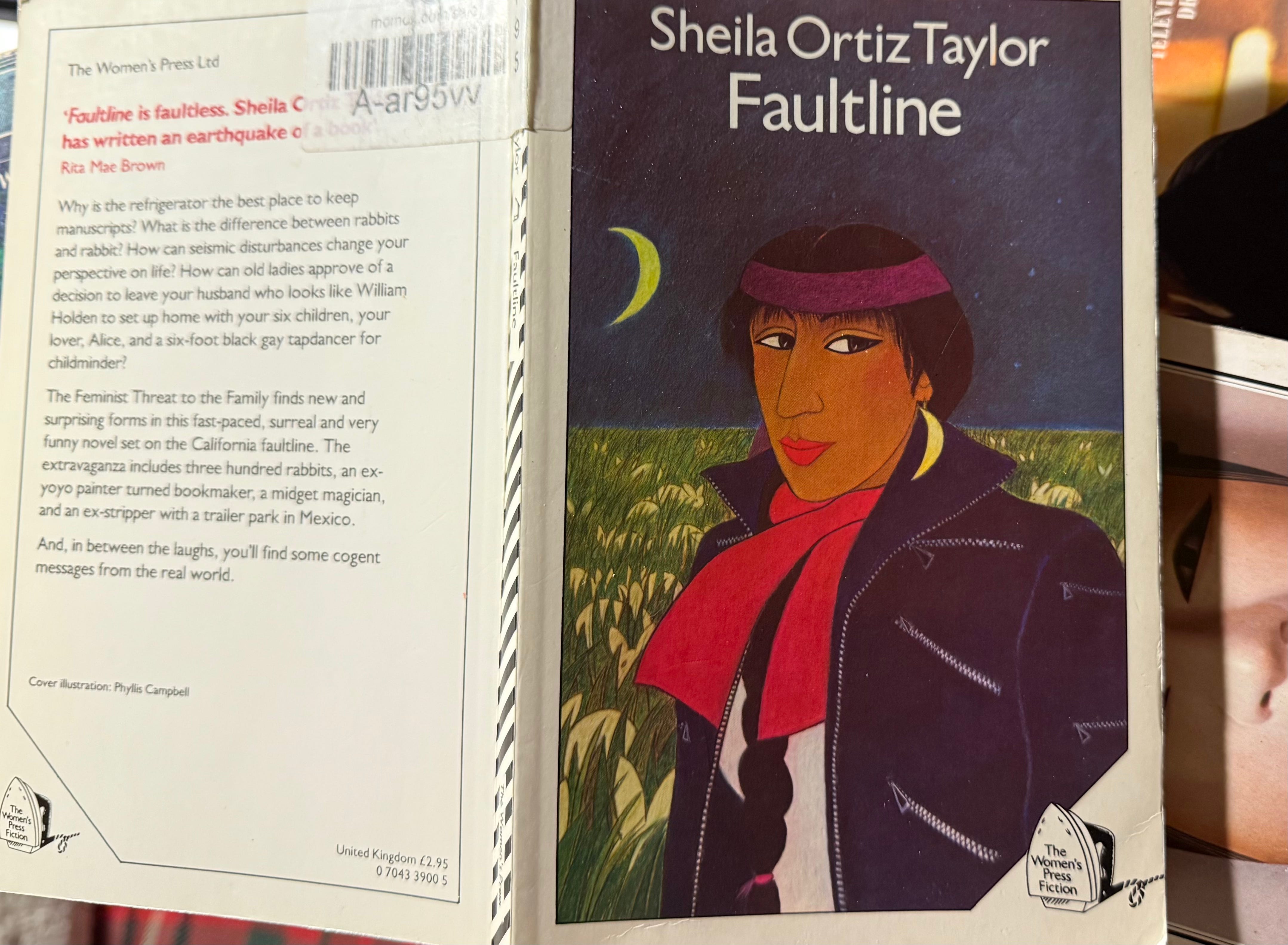
I should be able to knock together a vignette for this one without too much effort. There is a rather disappointing Wikipedia page on Sheila Ortiz Taylor with a lot of redundant harping on about her LGBT+ identity and her Chicana identity (how many can you have?) and nothing whatsoever on the literary merit or style of her writing. As for the novel’s content, the thing it seems to be constantly rubbing in is how the main character, Arden, her kids, and the people she likes to hang out with are really lovely, head-strong, unconventional, lively people, all able to enact something like a paradise in a bubble that is only occasionally upset by stuffy husbands, uncomprehending administrators, or the rule of law. Arden unwillingly ends up with several hundred rabbits (yes, they procreate rabbitly) and since she is beyond killing or eating them, works out some complex scheme to set them free. This may be one of the worst (ridiculous, unbelievable, unfunny) plot elements found in any of these novels. When I try to get to the bottom of my aversion, I think what I did not like here are the frequent addresses to the reader, the posturing, wise-cracking, cocky tone. Narration is split up across short chapters given over to multiple characters (we have two journals included), all employing the first person account to give another angle to the story of Arden Benbow, her asinine husband who thinks as a lesbian she shouldn’t be in charge of their mutual kids, her kids and her friends. Somehow, all these narrations seem infused by the same dead-pan and wise-cracking tone, and that annoys. Arden and her aunt Violet, a guy called Mauro Carbonara (isn’t it funny that he’ll become a cook?) who’s an orderly in Violet’s rest home, depart to Mexico where they meet the lovely and seasoned Campground Ruby. Everyone is incredibly relaxed and competent (the ‘competent actor’ is a taste the book shares with Heinlein’s Friday) and this is so damn infectious that it will cause the eventual transformation of the gumshoe, Michael Raven, who has been paid to follow this set, and the rest home orderly into a pair of gay caterers. Such can live be changed to the better. There is so much potential in each and every one of us. To be fair, the book lent itself quite well to the fleecing of some bits and pieces to be re-used in the interactions in the Californian commune that was becoming a central topic in Reading Matter. The thing that stood out for me was the visit to the mummies in the catacombs of Guanajuato: ‘A string of light bulbs along either side of the cave went on then, and I could see people lounging against the walls, people who had not come with us down the staircase.’